
I hadn’t planned to spend too much time in Berlin. While the city is no lightweight on the world stage, it rarely comes up as a must-see on visits to Europe. I suspect that is because the Second World War and subsequent division of Berlin by Allied victors destroyed much of the old world charm that makes European cities attractive to visitors. But my flights required me to spend at least a night there so I stretched it out for a few days. This allowed me to take in some of what Berlin had to offer, and see what had become of a city that had been front and center in my history and political science studies many decades ago.
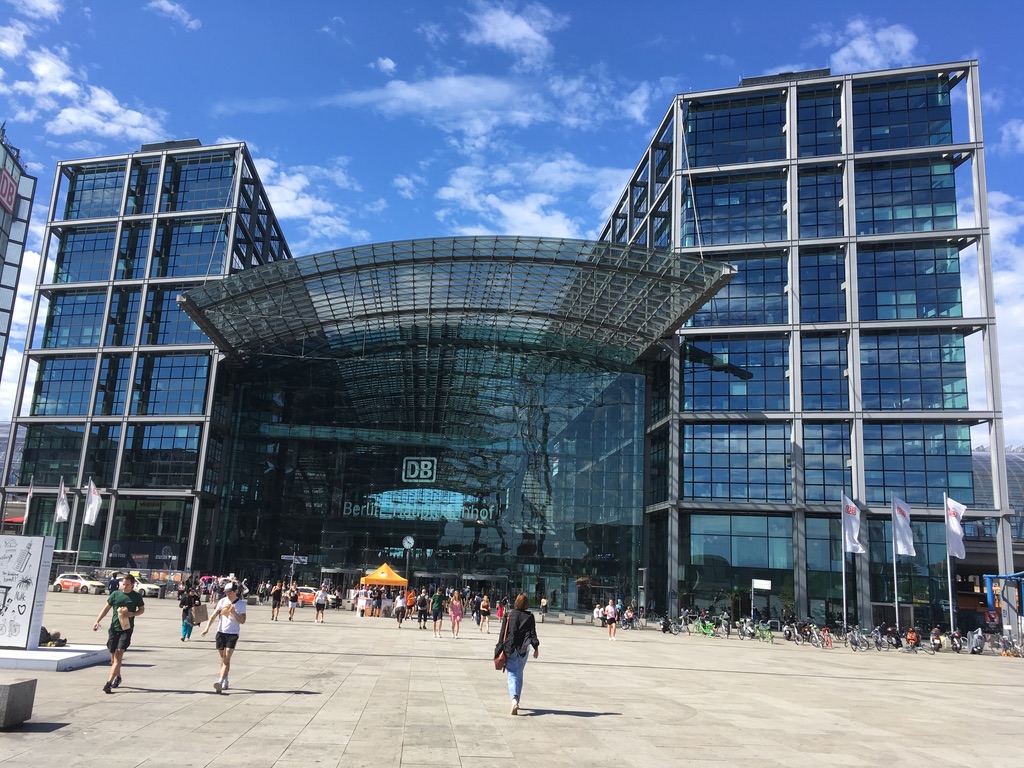
My lodging (Intercity Hotel) was next to Berlin’s modern Central Train Station (Hauptbahnhof), easy to get to via subway from Berlin’s new Brandenburg airport and within walking distance of many of Berlin’s main attractions.
I wasn’t entirely sure what to expect from the Berlin. The city had faded from the spotlight since the end of Cold War and, from my vantage point in North America, had quietly resumed its role as Germany’s capital. However, because many of the defining events of the 20th century were in some way connected to the place I suspected I would find plenty that was familiar. And sure enough, walking through central Berlin had the feel of a self-guided 20th century history lesson.
Many European cities have a timeless quality – a warmth and charm captured in their propensity to preserve, rather than continuously destroy and rebuild. Not so with Berlin. This place is marked and memorialized by historic, often tragic events from the recent past, making the city center appear at times like a monument to humanity’s folly.
My first stop was the Reichstag. The Neo-Renaissance building and seat of Germany’s national legislature became synonymous with the Nazi rise to power after they allegedly set the building on fire a month after Hitler was sworn in as Chancellor of Germany. The act launched a series of events that led to the Nazis consolidating power under the brutal dictator. Next came the 200+ year-old Brandenburg Gate. The 30-foot neo-classical monument, a central landmark and symbol of the city, was used for propaganda purposes by the Nazis and later became a symbol of a divided Germany when East Germany constructed the Berlin Wall and cut off access to the gate for both East and West Berliners.
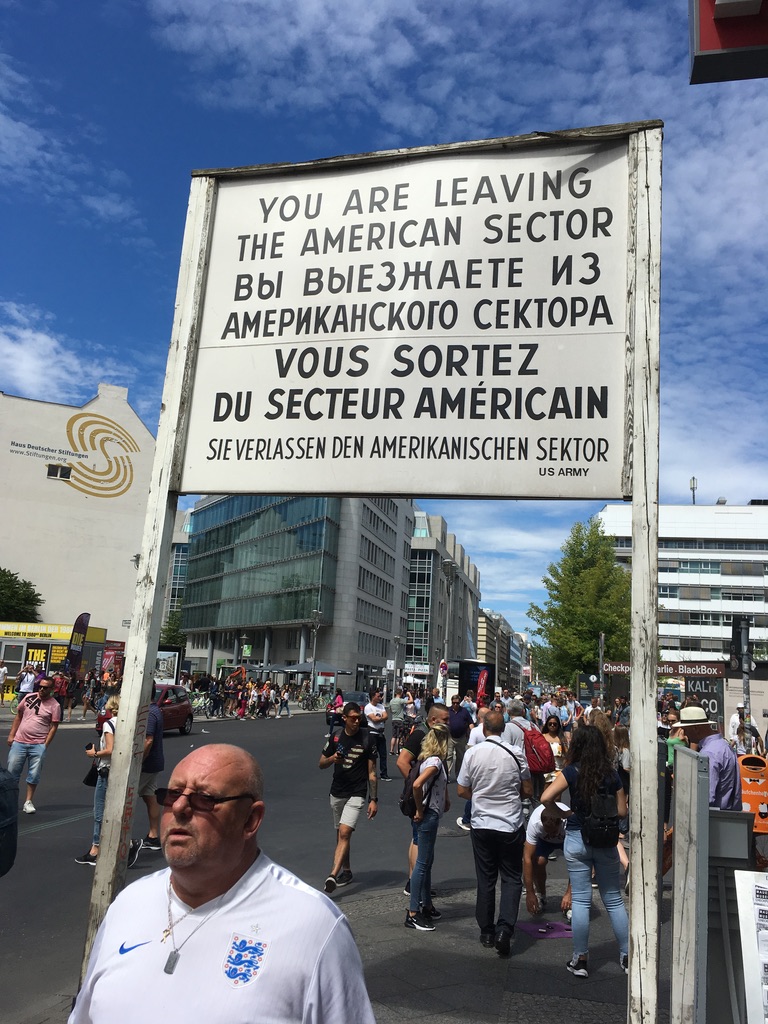
Not far from the Gate, I visited the Memorial to the Murdered Jews of Europe, built in 2004 to honor the six million Jews killed in the 2nd World War. Next was the Topography of Terror, a museum documenting the horrors inflicted on the German people by the Nazi regime. Rounding out my trek through the century’s crimes and misdemeanors, I stopped by Checkpoint Charlie, the most famous crossing point between East and West Berlin and a symbol of a city divided by war, politics, and eventually a 12-foot concrete wall.
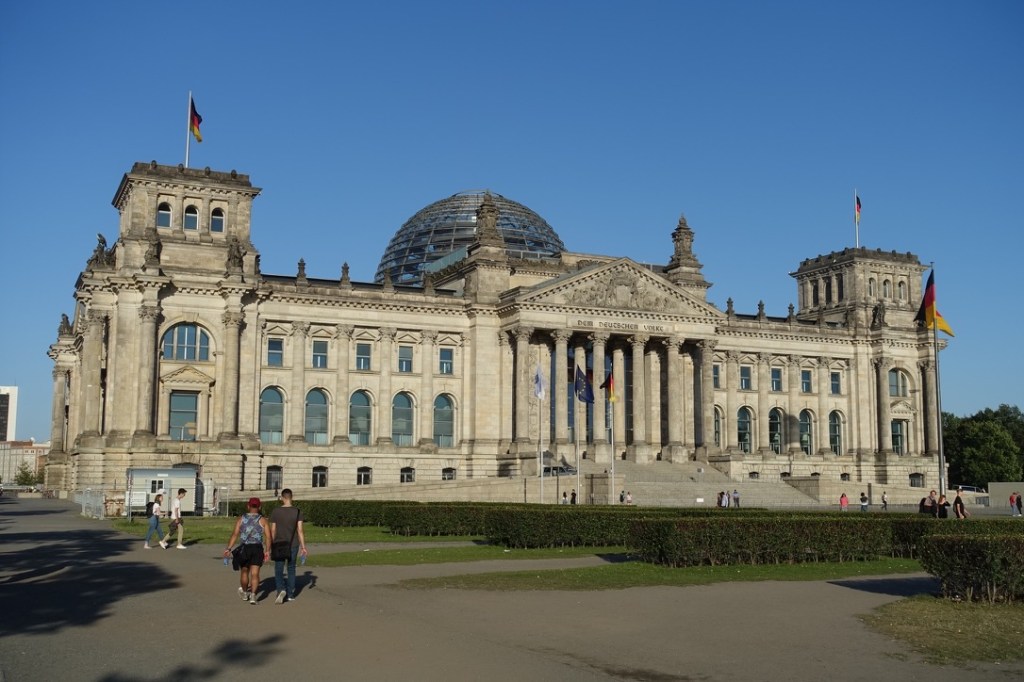


Murdered Jews of Europe
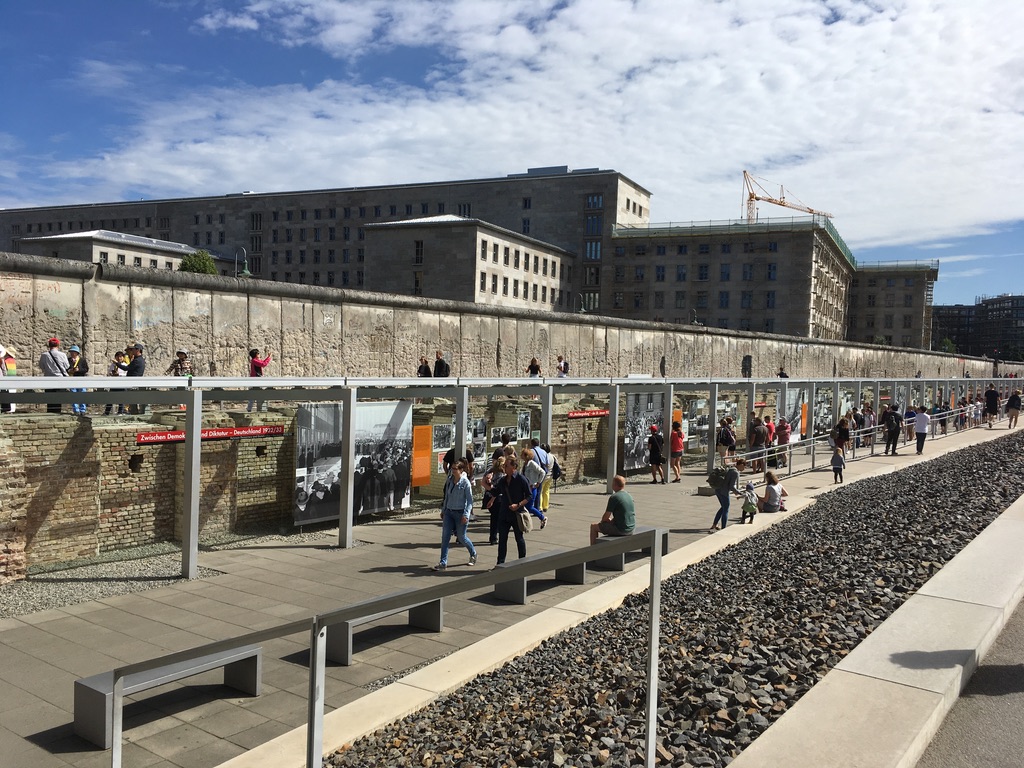
It wasn’t on my itinerary but towards the end of my Berlin walkabout I stumbled across the site of the bunker where Hitler made his final stand. It was there, in April 1945, where the dictator and wife Eva Braun committed suicide rather than be captured or killed by by the advancing Allied armies. There’s nothing left of the bunker but a plaque that has been set up to provide some information about the site.
It’s not clear what has replaced the bunker. As far as I could tell it looked mixed use – office, retail, residential. I’m not sure how a realtor would pitch the place: “You’ve got 1500 square feet, en-suite bathrooms, covered parking, and, hey, how ‘bout the location.”

Looking to lighten my Berlin experience some, the next day I got on the subway and headed out to Berlin’s TV Tower. Located in the former East Berlin, the 60s-era tower was designed to demonstrate the power of communism and as a symbol of East Berlin. I’m not sure how this squared with having a 27-mile concrete wall snaking through the city specifically designed to seal in anyone who didn’t appreciate this power, but those were the times.
In post-communist Berlin, the tower is a nice diversion from the street-level memorials and a great way to learn about the city. In good German fashion, the information provided on the observation platform provides copious details about the highlights below. I walked away with considerably more appreciation for the city’s diversity and nuance, and for the residents who helped to build a great city only to be victims of history’s seemingly random and at times cruel trajectory.
The last stop on my Berlin itinerary was the East Side Gallery, not far from the TV Tower via subway. The nearly mile-long gallery is the largest expanse of the Berlin Wall still standing and is now covered by roughly 100 graffiti. Considered the world’s longest open-air art gallery, it helps to preserve art that was painted by more than 118 artists from 20 countries after the opening of the Berlin Wall in 1989. The paintings honor the victims of the 30-year East German policy while reflecting the euphoria of the time. Highlights include “My God, Help Me to Survive This Deadly Love” depicting Soviet General Secretary Leonid Brezhnev kissing East German leader Erich Honecker, and “Berlin Wall Trabant,” which shows the East German car crashing through the wall.
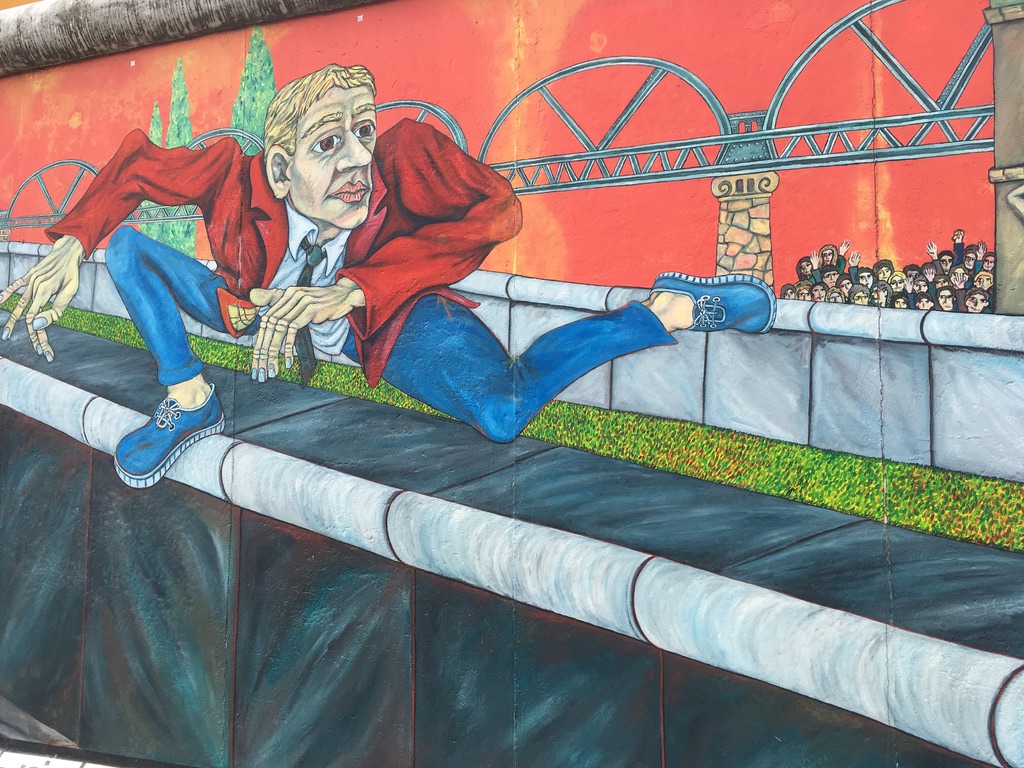


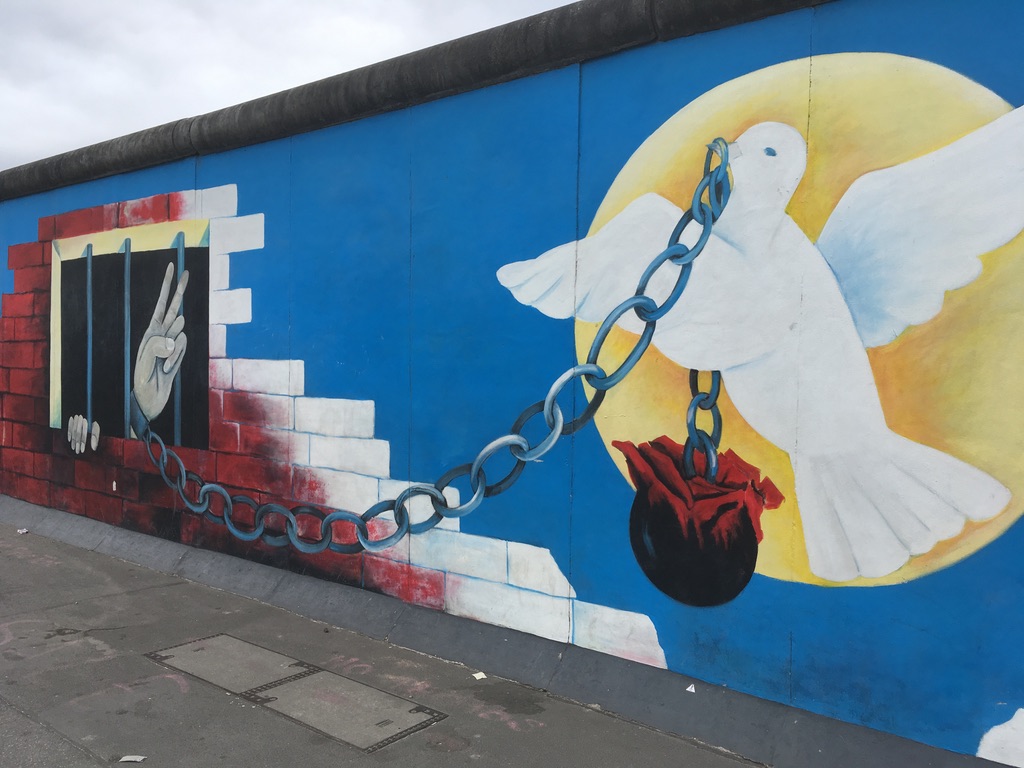
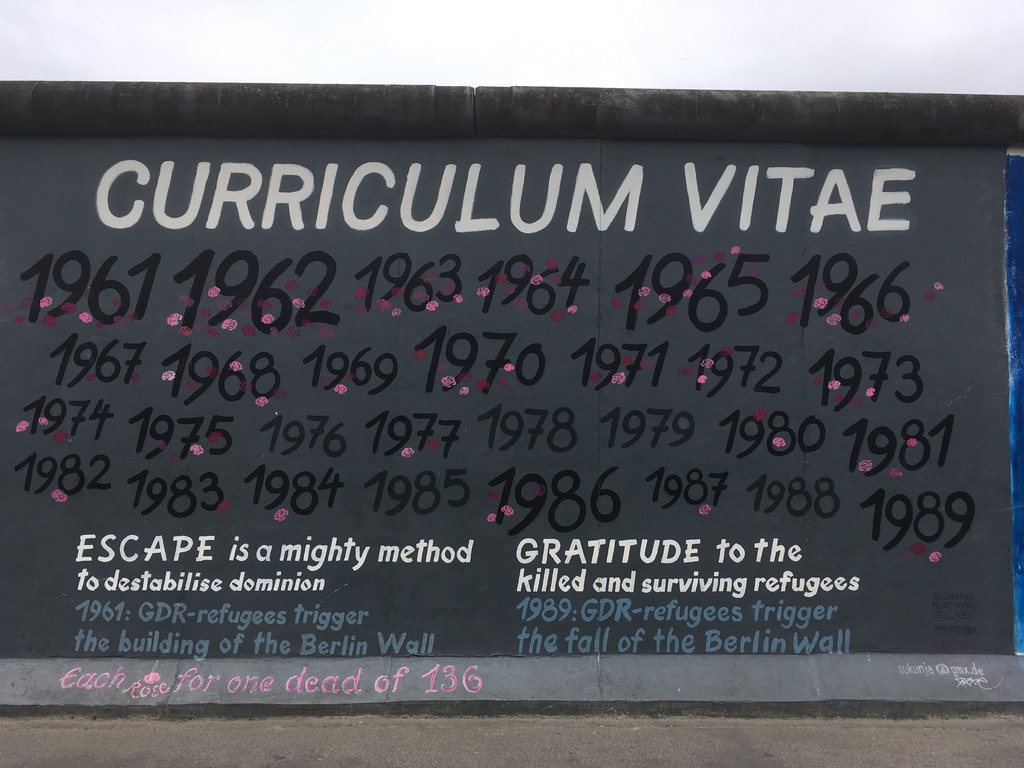
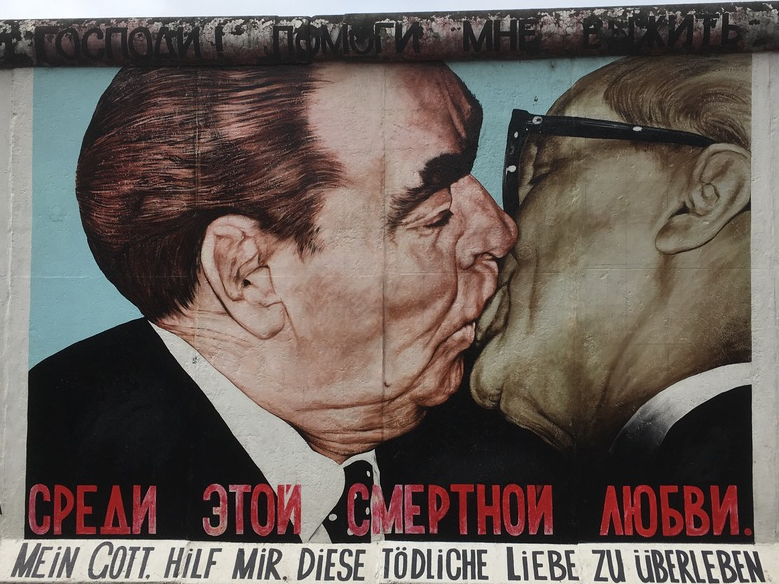
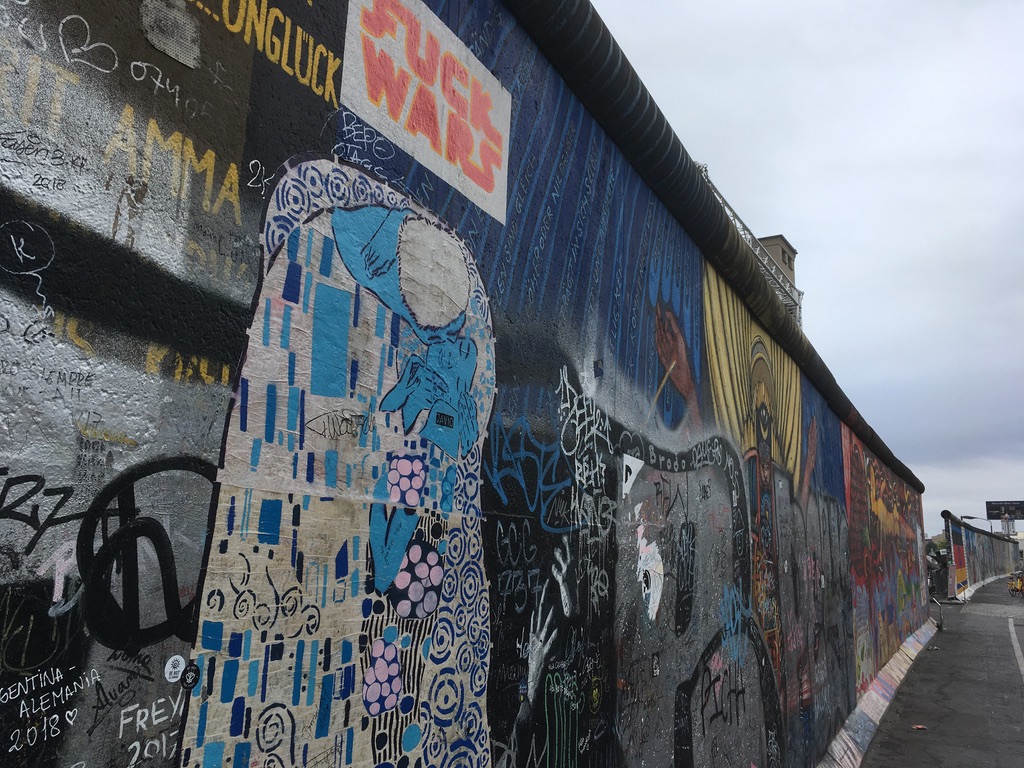
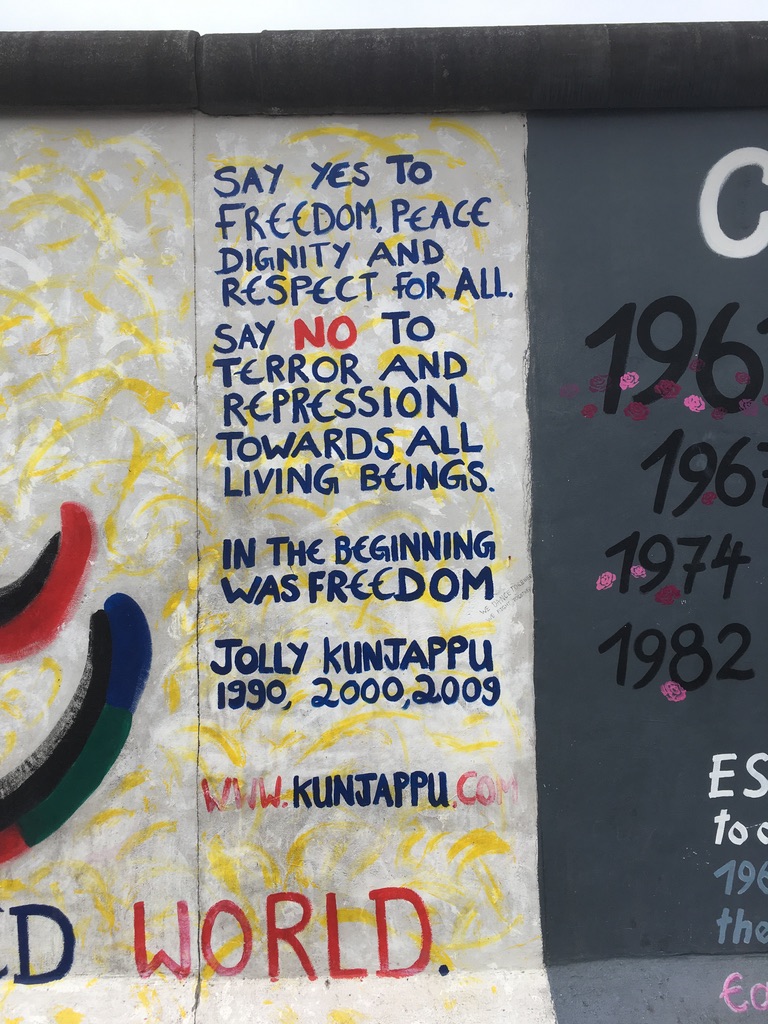
In many ways the East Side Gallery is emblematic of Berlin. Reduced to rubble during the Second World War and then divided for 45 years the city has managed to pick itself up, brush itself off, and move forward. The Reichstag, restored to its former glory after sustaining significant damage in World War II, is again the center of democratic government in a unified Germany. The Brandenburg Gate stands majestic and accessible, less a vehicle of propaganda and more an attractive part of the city to walk about and enjoy. The Topography of Terror and Jewish War memorial are powerful reminders to visitors and residents alike of the dangers of succumbing to violent and racist populism. Checkpoint Charlie is now a tourist attraction where visitors line up to take pictures with “U.S. servicemen” and carved out segments of the old Berlin Wall. Nearby, the “Charlie Living Complex,” a modern residential development, fills one of the last open lots where the Berlin Wall once stood.
The city’s remarkable rebirth only begs the question: If we are capable of such contrition and cooperation, why do we spend so much time at each other’s throats?

Had history chartered a different course, Berlin might have ended up one of the jewels in Europe’s urban crown, sharing the honor with the likes of London, Paris, and Rome. Two hot wars and one cold put the kibosh on that prospect, at least for now. During my brief visit, I didn’t spend any time sipping wine at street cafes, marveling at Renaissance art, or watching guards change. I was too busy strolling through one of Europe’s most fascinating and anguished cities, all the while getting caught up on some of the best and worst humanity has to offer.



 In Motion
Love it. Can’t wait to visit all the places you describe, and drink some wine in a cafe. 🙂
LikeLike
Maybe a nice dry Riesling 🥂
LikeLiked by 1 person
Wow, great write up. Love it!
LikeLiked by 1 person
Thanks Eddi!
LikeLike